Informationen about Long Covid, Post Covid und ME/CFS
Interesting facts about the long-term effects of a coronavirus infection
Fatigue, shortness of breath, concentration problems, heart palpitations, muscle and limb pain – these are just some of the symptoms that patients may experience long after recovering from a coronavirus infection. Not only people with severe courses of the disease are affected, but also those who had only mild symptoms, including children.
What is the difference between long Covid and post Covid?
Long Covid is an umbrella term for long-term health effects that may occur after an acute COVID-19 illness. The term “long Covid” includes symptoms that persist or newly develop between four and twelve weeks after the onset of COVID-19 and cannot be explained by a PCR-confirmed ongoing infection or other illnesses.
Both long Covid and post Covid are long-term consequences of coronavirus infection. They are characterised by the same symptoms and differ only in the duration of the condition: if symptoms persist for four to twelve weeks, it is referred to as long Covid; after twelve weeks, it is referred to as post Covid. This means that a long Covid condition can develop into post Covid.
Possible symptoms of long Covid and post Covid
The long-term health effects of COVID-19 include impairments to physical and mental health as well as limitations in functioning and quality of life. Reported symptoms vary widely. They may occur individually or in combination and last for different lengths of time. To date, there is no uniform definition of a distinct long Covid or post Covid disease pattern.
Among the most common long-term health effects of COVID-19 reported in patient forums or observed in studies so far are:
Other symptoms include chest pain as well as heart palpitations and irregular heartbeats, meaning subjectively perceived stronger, faster or extra heartbeats. Hair loss has also been reported. In addition, kidney and metabolic diseases such as diabetes mellitus, as well as thromboembolisms (blockage of a blood vessel by a blood clot), have occurred after the acute phase of the illness.
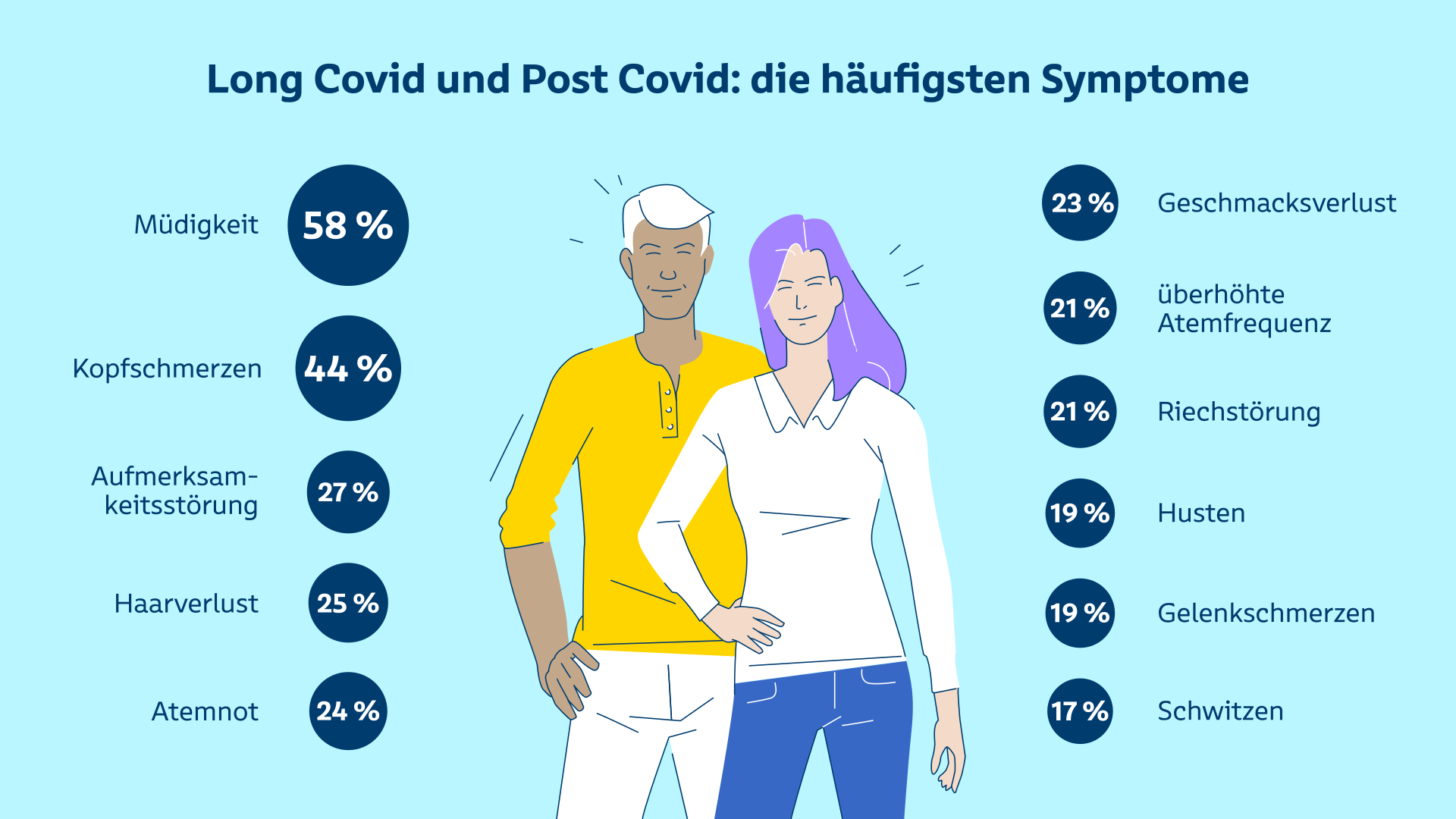
What is meant by fatigue?
Fatigue refers to pathological physical and mental exhaustion associated with often pronounced reduced performance and is one of the most common symptoms following a COVID-19 infection. People suffering from fatigue feel severely limited, can tolerate little physical exertion and experience hardly any improvement through rest and sleep. They may also feel listless and unmotivated. Concentration and memory problems as well as headaches may occur. Sleep, coping with everyday life and the ability to work can be significantly impaired. For children and adolescents, fatigue may impair or even prevent school attendance.
Chronic fatigue syndrome
Chronic fatigue syndrome, also known as myalgic encephalomyelitis (ME/CFS), is a complex neurological condition. It often occurs after a viral infection such as influenza or glandular fever. Researchers currently assume that around one to two percent of all people infected with COVID-19 develop a severe form of long Covid or post Covid in which the diagnostic criteria for ME/CFS are met after at least six months.
In ME/CFS, the body is no longer able to provide sufficient energy for physical or mental activity. Symptoms worsen significantly even after minimal exertion. Experts refer to this key symptom as post-exertional malaise (PEM).
PEM, or exertion intolerance, may occur immediately or approximately 12 to 48 hours after physical or purely cognitive activities, as well as after emotionally positive or negative events. It may last for several days or weeks or lead to a permanent deterioration of the condition. Depending on severity, very different activities can trigger PEM on an individual basis.
Other typical symptoms of ME/CFS include, among others:
Patients experience significant limitations in everyday life: even minor exertion can trigger a considerable deterioration. Routine daily activities may become impossible, and even phone calls can be overwhelming. Stress intolerance, concentration problems and even permanent bed confinement may occur the following day or just hours after exertion. Sleep does not improve symptoms.

What treatment options are available for long Covid and post Covid?
As the causes of the long-term effects of coronavirus infection are not yet well understood, treatment for long Covid and post Covid currently focuses on symptom management. According to current observations, symptoms improve in many patients after no more than two to three months. In some affected individuals, however, post Covid may persist for longer periods and possibly become permanent. Depending on symptom severity, specific therapies and training measures may be beneficial.
Physiotherapy in particular, including breathing therapy, therapeutic exercise and manual therapy, can be used to promote strength, endurance, walking ability and coordination. Occupational therapy can improve perception and movement of the arms and hands. Concentration and memory can also be enhanced through targeted training. Emotional disorders such as depression or anxiety can be treated with psychotherapy. Speech therapy may be helpful in cases of speech or swallowing disorders. In cases of reduced resilience, “pacing” (managing available energy carefully) is considered an important concept to avoid overexertion. For particularly severe symptoms, rehabilitation in a rehabilitation clinic may be beneficial.
Targeted drug treatment for long Covid and post Covid symptoms is currently not available. Research is ongoing to determine which already approved medications may be effective, for example to inhibit inflammatory responses or improve blood circulation.
The SBK health hotline offers advice and support around the clock
The medical experts at the SBK health hotline provide advice 24 hours a day, 365 days a year, without an appointment. This gives you the reassurance of receiving expert advice at any time. Important note: Advice provided by the SBK health hotline cannot replace a physician’s diagnosis.
Points of contact and medical background information
We have compiled a selection of medical background information and additional points of contact for you here.
Frequently asked questions about long Covid and post Covid
If you suspect that you have long Covid or post Covid symptoms, you should see a doctor, regardless of whether you tested positive for the coronavirus or not. If you have had COVID-19, a follow-up appointment is generally recommended. Contact your general practitioner’s office and bring all medical records you have to the appointment. Describe your symptoms in detail. In a thorough consultation, your doctor will ask you questions about your complaints. Given the wide range of possible symptoms, this is the best way to plan a tailored treatment.
Afterwards, you will undergo a detailed physical examination. Depending on your symptoms, your doctor may arrange further targeted tests. At the end of this first appointment, you may already receive a medical assessment of your condition. Your GP will continue to oversee your care – as with other illnesses – even if you need to see specialists. Especially with long Covid and post Covid, symptoms can be diverse, and you may be treated by different specialists or outpatient clinics. Your GP’s office can help coordinate tests and treatments. It is particularly important to ensure that your GP always receives all medical findings, as they know your medical history best. This allows both tests and any treatment measures to be coordinated and aligned.
If your child is affected, the pediatrician or local GP will take on the coordinating role, possibly in close cooperation with a children’s hospital.
Children and adolescents can also experience long-term health effects after a COVID-19 infection. Common symptoms, as in adults, include fatigue, muscle and joint pain, headaches, insomnia, and breathing difficulties.
Worldwide, the potential long-term effects in children are being closely studied. Until results are available, general guidance on diagnosis and treatment also applies to children and adolescents.
This might interest you

Medical advice around the clock

To enhance your personal well-being

We support you on your path toward psychotherapy


