Health Check-up
Make use of the preventive examination for early disease detection
The health check-up is aimed at the early detection of diseases such as cardiovascular diseases or diabetes mellitus. In addition, health risks such as high blood pressure should be identified early. Women and men between 18 and 34 years old can take advantage of the health check-up once. From the age of 35, the check-up can be performed every three years. For individuals over 35, the check-up is additionally complemented by a screening for Hepatitis B and C. If your doctor identifies risk factors in time, you benefit twice: diseases can be treated early, and you have the chance to adopt a healthier lifestyle.
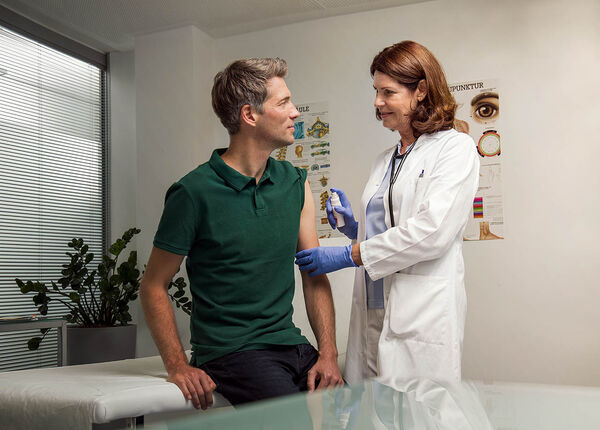
How the health check-up works
Laboratory tests of blood and urine
The laboratory tests are conducted first. As part of the health check-up, a blood test is carried out for people aged 35 and over, and for those under 35, it is only done if there are existing risks, such as obesity or high blood pressure. The blood sample is usually taken in the morning, as the last meal must have been at least twelve hours prior to avoid skewed results.
The blood test measures total cholesterol, LDL and HDL cholesterol, as well as triglycerides, and also determines the glucose level (fasting blood sugar). These values provide an initial indication of whether risk factors for cardiovascular diseases and diabetes exist. A full blood count is not included in the health check-up.
For individuals over 35, a test for Hepatitis B and C virus infection is performed once during the blood examination as part of the check-up.
In addition to the blood test, individuals over 35 also undergo a urine test. The urine is analyzed using a urine strip test, which checks for protein, glucose, red and white blood cells, as well as nitrite in the urine. The results provide insights into potential kidney disease or diabetes.
Medical history (anamnese)
The doctor will first assess the patient's medical history, including all past illnesses as well as those in the immediate family. This allows the doctor to consider any individual risks (such as genetic predispositions).
Medical examination
The doctor will measure your blood pressure, palpate the abdomen, listen to the heart and lungs, examine the head, neck, and sensory organs, as well as reflexes, joints, spine, and muscle tone.
Vaccination status check
The doctor will review the vaccination record to see if any vaccines need to be refreshed or given. If necessary, they will advise on recommended vaccinations and, if possible, administer them directly.
Consultation
Afterward, the patient will be informed about the results of the health check-up. The findings will be discussed, and if necessary, tips will be provided for adopting a healthier lifestyle. If any abnormalities are found, further tests will be arranged.
What costs does SBK cover?
All services that are part of the health examination for early disease detection, according to the guidelines, are fully covered by us. This includes the medical and laboratory tests described above. You only need to present your SBK healthcare card.
If an abnormality or a suspicion arises during the examination that requires medical clarification, we will also cover the costs for this.
As part of the health check-up, your doctor’s office may also offer so-called individual health services (IGeL). These are tests that are not part of the statutory benefit catalog due to their unclear effectiveness. You will need to pay for these services yourself. If this happens, ask your doctor for two things: specific information about why they recommend the additional tests, and some time to think it over. Any additional tests must be agreed upon in writing between you and your doctor. You can find more information on our page about Individual Health Services.
How to get the health check-up
Make an appointment for your health check-up with your general practitioner or an internist. You will typically have two appointments: one for the blood draw and urine sample, and another for the examination, review of the laboratory results, and consultation.
At the first appointment, simply present your SBK healthcare card, and you don’t need to worry about anything else. We will cover the cost of the health check-up for you.
This might interest you

Medical advice around the clock

Identifying health risks early and preventing illness

Use our extensive range of health courses for prevention


