Skin cancer screening
Information and decision-making aid on skin cancer prevention
Skin cancer is more common than many people think. Therefore, it’s important to regularly check your own skin and any moles. Starting at the age of 35, it is recommended to have a skin check by a doctor every two years. This examination is especially important for high-risk groups, such as people with fair skin and many moles. According to experts, the simplest and most effective preventive measure is still efficient sun protection through lotions or sunscreens.
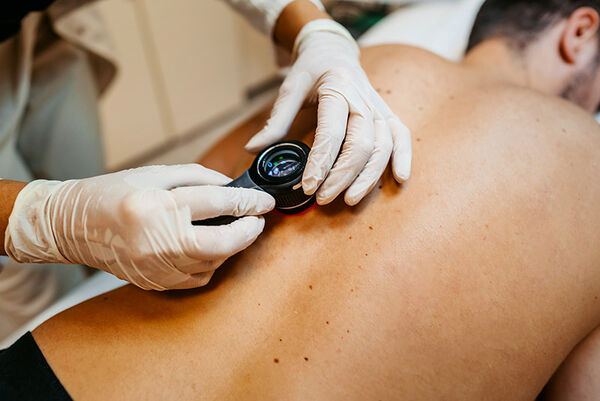
How skin cancer prevention works:
The goal of an early detection examination is to detect a disease before symptoms appear in healthy individuals. Therefore, at the time of the examination, individuals are considered healthy. Early detection allows for faster treatment and can positively influence the course of the disease.
Which costs are covered by SBK?
For Insured Individuals up to 34 Years Old: We cover the costs of skin cancer prevention up to €25 annually as an extra benefit for insured individuals up to 34 years of age. You can receive the screening at certified dermatologists. After the examination, you will usually receive an invoice, which you can submit to us. You can upload the invoice easily via Meine SBK app. Alternatively, you can send us the invoice by post. You will receive the reimbursement on your account within a few days.
In Bavaria, we can cover the costs of skin cancer screening for individuals under 35 every two years, and only at contracted doctors. We will gladly provide you with information on participating practices. Billing is usually done directly with us via your SBK healthcare card.
For Insured Individuals from 35 Years Old: Skin cancer screening is a statutory benefit for individuals aged 35 and above and is billed via the SBK healthcare card. You can have this examination every two years. For example, if you had a screening in June 2023, you can have the next one in January 2025.
For Abnormal Findings: If you notice any changes to your skin (e.g., a changed or suspicious mole), and you have it examined, this is no longer considered preventive care. These examinations are part of medical treatment, and we will cover the costs at any time.
How to get skin cancer prevention:
You can undergo skin cancer screening in practices for general medicine, dermatology, and internal medicine. However, there is one requirement: the doctor must be certified for skin cancer screening. This certification is necessary in order to bill the examination as a statutory service or receive reimbursement.
You can easily find a suitable practice in your area using the
Once you’ve chosen a practice, check under “Special Services” to see if the practice offers skin cancer screening.
Frequently asked questions about skin cancer prevention:
Sun exposure is the main cause of skin cancer. Therefore, people with fair skin or many moles are at a higher risk. To protect yourself, always use sunscreen when outdoors. Avoid the intense midday sun, stay in the shade, and cover your skin with clothing. Additionally, avoid tanning beds as the radiation is harmful to your skin.
People with very fair skin, those who spend a lot of time in the sun, and older individuals have a higher risk of developing skin cancer. Women generally have a lower risk than men. For men, the highest risk is after the age of 65.
Almost everyone has moles. Most of these brown spots are harmless, but sometimes they can change in shape, color, or size, or new, unusual spots can appear. If this happens, consult a doctor.
How can I do a self-examination?
It’s important to regularly check your skin, preferably once a month, for changes. The
A doctor can identify suspicious moles that may lead to skin cancer. This allows for early detection and faster treatment, which is essential for basal cell carcinoma, squamous cell carcinoma (both types of non-melanoma skin cancer), and malignant melanoma (the deadliest form of skin cancer).
Early detection can help reduce the severity of the disease. However, the screening can’t predict or prevent skin cancer—it’s all about early identification to treat it more effectively.
Skin cancer screening is non-invasive. However, a skin lesion may be flagged as suspicious, which could cause anxiety and lead to further testing. Sometimes, the lesion turns out to be harmless. Overdiagnosis occurs when a potentially dangerous skin lesion is found that would never have posed a risk. How often this happens is unclear, but it’s possible that a skin cancer could be missed if not detected during the screening.
The examination itself is not painful, although some people may feel uncomfortable undressing completely.
Videodermatoscopy captures images of individual pigmented lesions and stores them in a computer. It’s primarily used to monitor and track changes in suspicious skin spots.
The Federal Joint Committee (G-BA) has not included videodermatoscopy in the statutory benefit catalog because no proven advantages over standard screening have been demonstrated. Therefore, it remains an individual health service (IGeL) and must be paid for by the patient.
This might interest you

Medical advice around the clock

Identifying health risks early and preventing illness

Fast diagnosis of skin disorders


