Shingles vaccination
Information about the shingles vaccination
In Germany, more than 400,000 people contract shingles every year. The Standing Committee on Vaccination (STIKO) therefore recommends the shingles vaccine as a routine vaccination for people aged 60 and over.
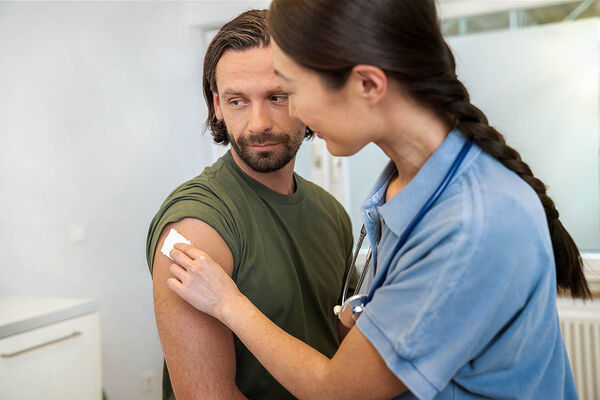
What is shingles?
Shingles (herpes zoster) is an infectious disease caused by the varicella-zoster virus. These are the same viruses that cause chickenpox. The varicella-zoster virus settles in the body’s nerve cells and remains there. However, if the body’s defences weaken – for example, due to ageing – the viruses can become active again and multiply. This leads to the painful blister-like rash known as shingles. As the nerve pain can persist long after the rash has subsided, it is important to prevent the condition. Shingles is particularly common in people aged 50 and over.
How can you protect yourself against shingles?
A shingles vaccination can help prevent the condition.
Who is the vaccination suitable for?
As shingles is more common in older people and can be more severe, particularly in older adults, the STIKO recommends the standard vaccination for everyone aged 60 and over.
The shingles vaccination is also recommended for people aged 18 and over if they are at increased risk of contracting shingles due to underlying health conditions. Risk groups include, amongst others, people with:
Risk groups also include people with a severe form of a chronic underlying condition. The STIKO lists the following conditions:
malignant neoplastic diseases
Which vaccines are available?
The primary vaccination course comprises two doses administered two to a maximum of six months apart. Following full immunisation with the inactivated vaccine, protection lasts for at least ten years. Based on the current body of research, it is not yet possible to say definitively whether a booster dose will be necessary at a later stage.
What side effects may occur?
Redness, swelling and tenderness at the injection site are quite common following vaccination. In the first three days after vaccination, symptoms such as headaches, stomach and gut problems, tiredness, chills, fever or muscle aches may occur. In addition, itching at the injection site may develop and you may feel unwell. Swollen lymph nodes and joint pain are symptoms that may occasionally occur. Physical reactions to a vaccination are usually short-lived. They should subside after one to three days. Fatigue and feeling unwell may impair your ability to operate machinery after vaccination. It is therefore recommended that you do not drive a vehicle or operate machinery. Side effects are more likely to occur in younger immunocompromised people than in older immunocompromised people. For further information about risks and side effects, please consult your doctor or pharmacist.
What costs does SBK cover?
We cover the costs of the shingles vaccination for people aged 60 and over, as well as for people aged 18 and over, provided they belong to one of the risk groups mentioned above. The service is charged directly to us through your SBK Healthcare Card.
In rare cases, the STIKO recommendation may not be met, and the doctor’s practice may issue a private invoice. We will reimburse 100% of the private invoice for a shingles vaccination for people under 50, provided they have an underlying medical condition or an immune deficiency and have a doctor’s recommendation.
Simply submit the invoice online via Meine SBK. Alternatively, send your documents by post. You can find our
Where can you get vaccinated?
You can get the shingles vaccination at your GP. It’s best to check in advance whether the practice has the vaccine in stock. You may also be given a prescription for the vaccine first. You can then collect the vaccine from a pharmacy and bring it with you to your vaccination appointment at the practice.
Questions about the pathogen and the vaccination
You can find answers to the most important questions about the shingles vaccination in the following information provided by the Robert Koch Institute:


