Health checks for children and young people
Regular health checks for the benefit of your young ones
Your child’s health is important to us: We not only cover the costs of the legally mandated preventive check-ups for children and adolescents, but also offer additional examinations as an extra benefit. This gives you greater assurance that your child is developing well.
Vaccinations are the best protection against infectious diseases. Many illnesses are often forgotten or underestimated because they have become less common due to vaccination programs. However, even seemingly harmless childhood diseases, such as measles, are highly contagious and can have serious consequences, even in adults. To help you make the right decisions as parents, we have summarized the most important information about childhood vaccinations recommended by the experts of the Standing Committee on Vaccination (STIKO).
Health checks for children – your benefits
As part of the Starke Kids health programme, your children receive additional preventive medical check-ups – above and beyond the statutory standard.We cover additional vaccinations, such as against influenza and TBE, as an extra service.You will receive a bonus for your child's vaccinations and preventive medical check-ups as part of the SBK bonus programme.If you have any questions about your child's development and preventive medical check-ups, you can call the SBK Family Health Telephone around the clock.
Want to join SBK? Arrange a free consultation now
This examination takes place directly after birth in the hospital.
A pregnancy, birth, and family history is recorded.Vital functions such as breathing and heartbeat are checked, as well as the newborn’s skin color and signs of maturity.
Timing: 1st–3rd day of life
The following additional screenings are scheduled for your baby:
Expanded newborn screening: Blood tests for metabolic disordersNewborn hearing screening: To rule out hearing impairmentsCystic fibrosis screening: Blood analysis to detect cystic fibrosis early and allow prompt treatmentPulse oximetry screening: Screening for critical congenital heart defectsSpinal muscular atrophy screening: Checks for muscle weakness affecting lung functionSickle cell disease screening: Detects disorders of red blood cells that can cause oxygen deficiencyThis examination usually still takes place in the hospital.
Your baby is weighed and measured.Sensory organs, chest and abdominal organs, genitalia, head and skeletal system, motor skills, reflexes, and hip development are examined.Screening for metabolic or hormonal disorders (if not already done).RSV prophylaxis with the drug Nirsevimab should be given between October and March to all newborns between the 3rd and 10th day of life, before hospital discharge. More information on RSV prophylaxis for newborns and infants can be found here.This examination is the first to be carried out at the local pediatric practice.
Your baby is weighed and measured.Examination of the hip joints to detect possible misalignments, as well as assessment of eye reaction, hearing, reflexes, and motor development.Discussion of your child’s feeding and sleep patterns.Information on breastfeeding, nutrition in general (including vitamin D supplementation), and accident prevention.Vaccination recommendations according to the Standing Committee on Vaccination (STIKO):
At 6 weeks of age, the first vaccination against rotavirus is recommended (first basic immunization).You will receive a yellow vaccination card for your child, which should be kept together with the examination record book.Good to know: At your pediatrician’s office, you will receive a yellow examination record book for your child. All future U-examinations will be documented here. The record book also contains a stool color chart, which helps detect biliary atresia more easily. Biliary atresia is a rare condition that mainly occurs in newborns. You will be informed about this condition by the doctor during the U2 and U3 examinations. Typical symptoms that may appear in the first weeks of life include persistent jaundice and pale-colored stool.
Your baby is weighed and measured.Examination of the skin, chest, abdomen, genital and sensory organs, motor skills, and nervous system.Check of the fontanelle (the soft spot on the baby’s head) to ensure it is large enough for the skull to continue growing without problems.Assessment of age-appropriate motor skills, coordination, and response to visual and auditory stimuli.Vaccination recommendations according to the Standing Committee on Vaccination (STIKO):
Vaccination against rotavirus and pneumococci.6-in-1 combination vaccine against diphtheria, tetanus, Haemophilus influenzae (Hib), hepatitis B, poliomyelitis, and whooping cough (pertussis) (first basic immunization – depending on the vaccine, 2–3 oral doses follow at 4-week intervals).Your baby is weighed and measured.Assessment of mobility and body control (head posture), motor skills and coordination, as well as hearing and vision.Advice on complementary feeding and oral hygiene, as well as tooth-friendly nutrition.Evaluation of the child’s social interactions.Vaccination recommendations according to the Standing Committee on Vaccination (STIKO):
Catch-up vaccinations for incomplete immunizations can be administered. Please contact your pediatrician’s office with your child’s yellow vaccination card.Examination of the child’s age-appropriate physical development.Assessment of motor development, such as crawling, sitting, or standing.Focus on cognitive development and sensory organs. Many children experience stranger anxiety during this phase – this behavior is also discussed.Observation of the child’s speech behavior and response to their own name.Parental guidance on caring for the first teeth.
Vaccination recommendations according to the Standing Committee on Vaccination (STIKO):
6-in-1 combination vaccine against diphtheria, tetanus, Haemophilus influenzae (Hib), hepatitis B, poliomyelitis, and whooping cough (pertussis).Vaccination against pneumococci and chickenpox (second basic immunization at 15 months of age with a separate appointment).3-in-1 vaccination against measles, mumps, and rubella (MMR) – second basic immunization at 15 months with a separate appointment.Examination of the child’s age-appropriate physical development.Assessment of the child’s movement skills (fine motor skills, body control such as walking and climbing stairs).Evaluation of language development (e.g., naming objects, forming simple two-word sentences) and social behavior, as well as cognitive understanding (e.g., following simple instructions).Vaccination recommendations according to the Standing Committee on Vaccination (STIKO):
Catch-up vaccinations for incomplete immunizations can be administered. Please contact your pediatrician’s office with your child’s yellow vaccination card.Examination of the child’s age-appropriate physical development.Assessment of language development and screening for dental, oral, and jaw anomalies, including advice on caries prevention and oral hygiene.Discussion of topics such as everyday nutrition and physical activity, as well as age-appropriate media use.Vaccination recommendations according to the Standing Committee on Vaccination (STIKO):
Catch-up vaccinations for incomplete immunizations can be administered. Please contact your pediatrician’s office with your child’s yellow vaccination card.Examination of all organs and the child’s movement patterns to detect any organ diseases, movement disorders, vision and hearing problems, speech disorders, or behavioral issues in time before starting school.Vision and hearing tests, as well as assessment of language development, independence, and social skills (behavior in groups, with family, and during solitary play).Vaccination recommendations according to the Standing Committee on Vaccination (STIKO):
Catch-up vaccinations for incomplete immunizations can be administered. Please contact your pediatrician’s office with your child’s yellow vaccination card.Usually the last preventive check-up before starting school.Examination of language skills and vocabulary, cognitive abilities, and fine motor skills (e.g., holding a pencil with three fingers).Examination of all organs to detect possible illnesses or abnormalities before school entry and ensure timely treatment.Assessment of vision, hearing, and social behavior.Recommendation for caries prevention using fluoride.Vaccination recommendations according to the Standing Committee on Vaccination (STIKO):
First booster vaccination against tetanus, diphtheria, and whooping cough (pertussis).Screening for developmental disorders (e.g., reading and writing difficulties), motor development issues, socialization and behavioral disorders (e.g., attention deficit hyperactivity disorder, ADHD).Discussion of the child’s media use.The pediatrician talks with the child about mental well-being, healthy lifestyle habits (nutrition, exercise, stress management, skin protection from UV radiation, handling of addictive substances, accident and violence prevention).Vaccination recommendations according to the Standing Committee on Vaccination (STIKO):
Catch-up vaccinations for incomplete immunizations can be administered. Please contact your pediatrician’s office with your child’s yellow vaccination card.Note: The U10 check-up is available at participating pediatric practices as part of the Starke Kids health program. More information can be found here.
Screening for school performance issues, socialization and behavioral disorders, dental, oral, and jaw anomalies, as well as guidance on nutrition, physical activity, stress management, addiction prevention, and media use.Health counseling on exercise and nutrition, stress management, responsible media use, skin protection from UV radiation, handling of addictive substances, and accident and violence prevention.Vaccination recommendations according to the Standing Committee on Vaccination (STIKO):
Second booster vaccination against tetanus, diphtheria, and whooping cough (pertussis).Booster vaccination against poliomyelitis.Note: The U11 check-up is available at participating pediatric practices as part of the Starke Kids health program. More information can be found here.
Examination of general health, as well as mental and school development.Early detection of psychological and psychosocial risk factors and health-risk behaviors (e.g., smoking and alcohol consumption).Discussion of puberty and its effects.If needed, adolescents can confidentially discuss topics such as eating habits, sexuality, drug and media use, or other concerns with their pediatrician.Vaccination recommendations according to the Standing Committee on Vaccination (STIKO):
If not already done at U11:
Second booster vaccination against tetanus, diphtheria, and whooping cough (pertussis).Booster vaccination against poliomyelitis.HPV vaccinationMeasurement of height, weight, and blood pressure. If abnormalities are found, such as over- or underweight, guidance on nutrition and exercise is provided.Detection of possible posture problems, often caused by growth spurts.Physical examination includes hearing, vision, and allergy tests.Discussion of puberty-related issues, sexual health, and career aspirations.Early detection of chronic diseases such as diabetes or thyroid disorders.Vaccination recommendations according to the Standing Committee on Vaccination (STIKO):
Catch-up vaccinations (for example, HPV vaccination) can be administered. Please contact your pediatrician’s office with your child’s yellow vaccination card.Note: The J2 check-up is available at participating pediatric practices as part of the Starke Kids health program. More information can be found here.
Reminder service for preventive check-ups
Our service for you: If you wish, we are happy to remind you by email about your child’s next upcoming preventive check-up. You can easily give your consent yourself in the Meine SBK app. Alternatively, you can contact your personal SBK consultant, who will take care of it for you.
Give consent
Dental Preventive Check-ups:
We cover regular preventive check-ups for dental, oral, and jaw health for children starting from the sixth month of life. Children and adolescents between the ages of 6 and 17 can have dental check-ups twice per calendar half-year free of charge. Children aged 12 and older also receive a bonus booklet at the dentist’s office. More information is available on the Dental Care for Children page.
How your child receives preventive check-ups and vaccinations:
Preventive check-ups for newborns (U1 and U2) take place shortly after birth, usually directly in the hospital. Your advantage: you don’t need to worry about it. The medical staff performs the examinations automatically. Billing is handled directly between the hospital and us.
The procedure for all further examinations:
You schedule an appointment at a pediatric practice. Please note: examinations can only be carried out and billed by a doctor within the timeframes mentioned above. Expect longer waiting times when making appointments and plan ahead. The practical appointment calculator can help you with this.The pediatrician conducts the appropriate examination, advises you on recommended vaccinations, and can vaccinate your child immediately. Important: be sure to bring the vaccination card and U-examination record book to the appointment.The pediatric practice bills the examinations and the STIKO-recommended vaccinations directly through your child’s SBK healthcare card. There are no costs for you.
Frequently asked questions about vaccinations
We have put together a list of frequently asked questions on the subject of vaccinations along with their answers.
Most childhood diseases such as measles and chickenpox can be cured without any consequences. In some cases, however, they can give rise to serious – and even life-threatening – accompanying illnesses such as pneumonia or encephalitis. And it’s not just children who can pick up these diseases, either; adults are also susceptible and actually suffer from them far worse. In addition, these typical childhood diseases are highly contagious and can result in widespread outbreaks. To prevent this, certain groups of people are required to be vaccinated against measles, for example.
Combination vaccines contain several pathogens for various infectious diseases and so counteract a number of diseases at the same time. They are particularly common for children so as to minimise the overall number of injections they have to sit through. Instead of receiving three different injections for measles, mumps and rubella, for example, your child can have them all combined into one, which is followed up later with a single booster.
Live vaccines are made up of weakened pathogens that are no longer capable of causing a disease. Inactivated vaccines, on the other hand, contain pathogens that are no longer active yet still cause the immune system to respond. The vaccinations in use today are generally the inactivated variety.
Most of the vaccines used today contain pathogens that have been made harmless and are used in tiny quantities. This means that the vaccine cannot trigger any diseases. For various reasons, vaccines contain traces of accompanying substances that cannot be left out. These accompanying substances serve primarily to deactivate viruses and minimise their longevity, or else prevent impurities from being produced. The adjuvants, as they’re known, are used in part to improve the effectiveness of the vaccine.
Vaccinations today are well tolerated and are strictly monitored. About one-third of those vaccinated experience only redness or slight swelling at the injection site. This is harmless and shows that the body is responding to the vaccine. Occasionally, a mild fever and fatigue may occur during the first three days after vaccination. Headaches, muscle or joint pain, nausea, or allergic reactions are rarely observed. Even people with allergies usually have no problems with today’s vaccines, as they contain very little egg protein. If an egg allergy is known, please consult your doctor.
Preventive Check-upsHealth Information for Children and AdolescentsInformation on the U-Examination Record BookVaccination Schedule and STIKO RecommendationsExplainer Video – Measles Recommendations for Children (Federal Centre for Health Education)

Medical advice on pregnancy and children

Happy children are strong
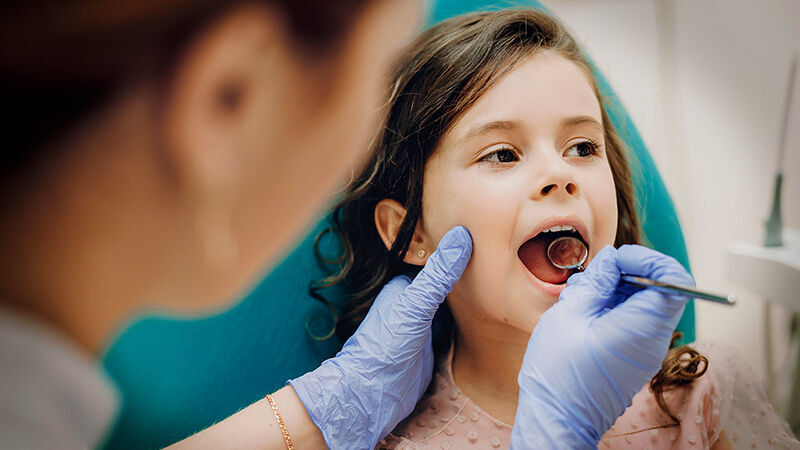
Regular dental check-ups are particularly important for children